In June 2026, David Daokui Li, Co-President of the Society for the Analysis of Government and Economics (SAGE) and Director of the Academic Center for Chinese Economic Practice and Thinking (ACCEPT) at Tsinghua University; Li Ke'aobo, Deputy Executive Director of ACCEPT; Xue Jianpo, Deputy Director of the Zou Zhizhuang Institute of Economics at Xiamen University; and Xu Xiang, Professor of the Central University of Finance and Economics, along with others members of a Chinese delegation, were invited to attend the 21st World Congress of the International Economics Association (IEA) in Belgrade, Serbia. Both prior to and after the commencement of the conference, the members of the delegation met with embassy staff, local dignitaries, experts and scholars, engaging in extensive detailed discussions and exchanges on topics of current interest, such as ongoing developments in the field of government and economics and the state of China-US relations in the domain of artificial intelligence (AI).
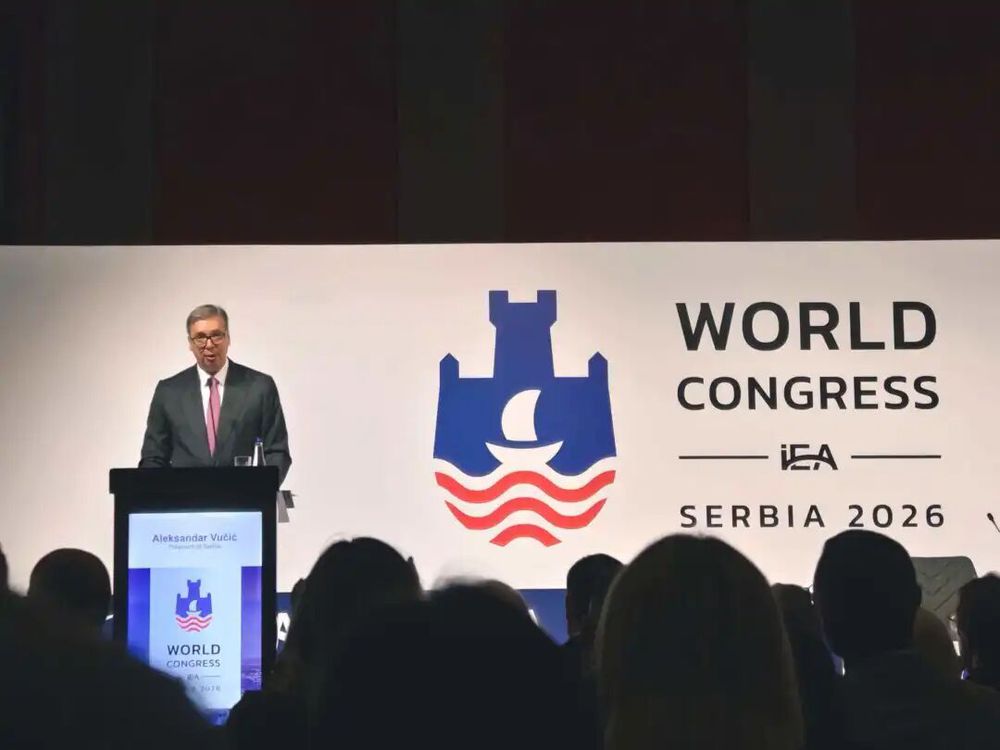
Serbian President Aleksandar Vučić addresses attendees at the 21st IEA World Congress
This year's congress brought together over 1,000 top economists, policymakers, central bankers and representatives from various international organizations worldwide, including several Nobel laureates in economics. Serbian President Aleksandar Vučić was also in attendance during the event's opening ceremony. The major topics covered during the meeting revolved around multiple dimensions, including changes in the geopolitical landscape, international trade and industrial policy, inflation, currency stability, AI, labor markets, and the new global economic order.
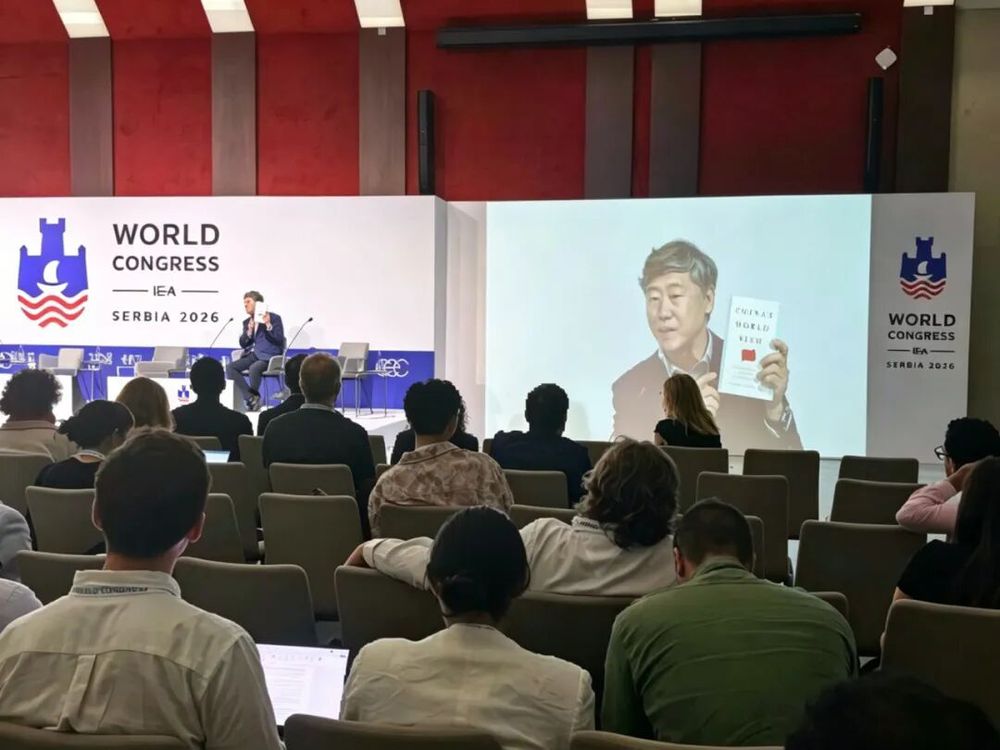
During the roundtable discussion session held on June 24, David Daokui Li relayed that China-US relations in the domain of AI indicate a complex pattern of "competition and coexistence," with technological innovation and geopolitics being closely intertwined. He further expressed that due to its widespread application in areas closely associated with national security and strategic competition, AI-related technologies (especially in terms of export controls on high-end chips) has become a critical source of ongoing tensions between China and the US. The US is seeking to maintain its technological edge, while China is meanwhile being compelled to accelerate its own independent research and development efforts. In the face of US chip restrictions, China's AI industry has not stagnated; but on the contrary, has revealed unique exploratory pathways that the country can pursue in response. Scholars at the conference noted that if China is to overcome its bottlenecks in computing power, mainstream Chinese AI model developers will increasingly move to adopt open-source strategies. This not only provides a means to accumulate a broader range of input from developers, while rapidly iterating and optimizing model architectures, but also constitutes a development model of "replacing computing power scale with network effects." In addition, with regards to establishing a wholescale domestic industrial chain. Despite its shortcomings in cutting-edge chip manufacturing technologies, China maintains a significant advantage in other key links of the AI hardware industry chain—such as optical modules, connectors, and liquid cooling systems—and is deeply integrated with global supply chains, which includes major players such as NVIDIA. This interdependent relationship of "you are a part of me and I am a part of you makes complete "decoupling" exceedingly difficult. At the governmental level, the Chinese government has played an active role in the supply of raw data and basic rule-making by establishing new institutions such as the National Data Administration, aiming to provide high-quality training data and institutional foundations for the development of AI-related technologies by acting as a "market builder" rather than a mere regulator.
Li argued that the future direction of the market for AI-related technologies is likely to see a long-term state of coexistence between open-source and closed-source models, while the intensive competition between China and the US at the foundational model layer may create opportunities for other regions like Europe, allowing them to focus on developing upper-layer applications and potentially capture value at other points along the value chain. In view of potential future risks, the rapid development of AI is creating a variety of different challenges, including impacts on the labor market, ethics and safety (such as risks from biological weaponization), and financial stability (such as the emergence of potential bubbles), all of which urgently require greater intergovernmental cooperation to establish a framework for the global governance of AI. However, at this present moment in time, such cooperation remains insufficient.
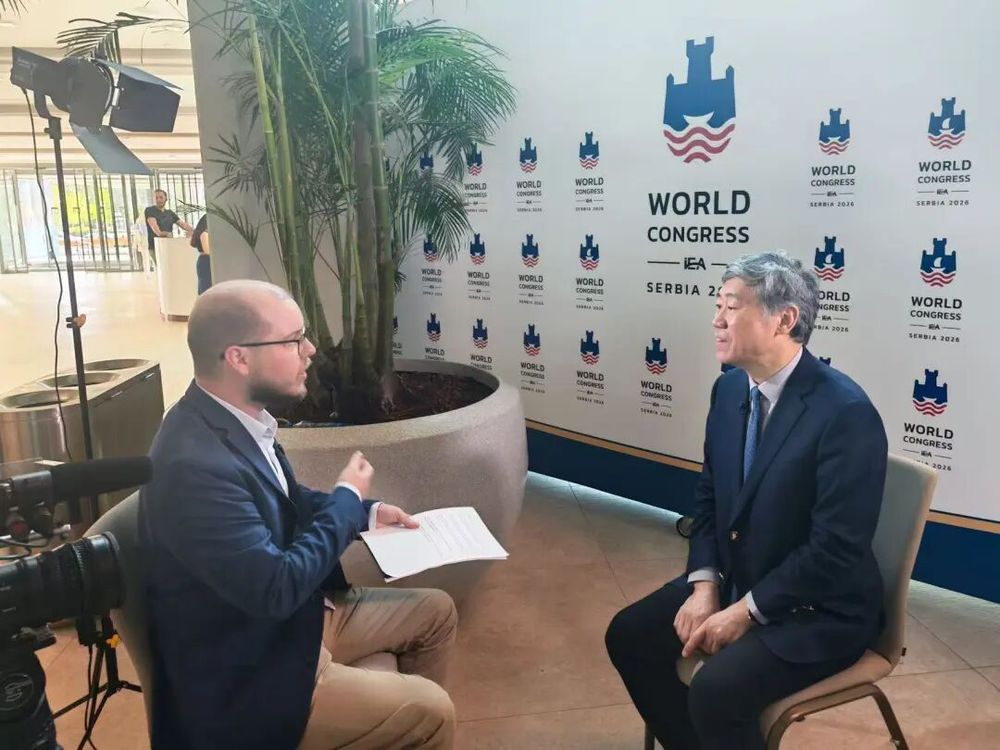
On conclusion of the event's proceedings, David Daokui Li was interviewed by Serbian TV
On July 25, during a special sub-forum on "Government and Economics," Li emphasized the necessity of establishing this entirely new branch of economics. He pointed out that in the modern market economy, the government is no longer a neutral referee, but an extremely important active participant. Economic performance, moreover, largely depends on government actions. Unlike traditional public economics or public choice theory, this field advocates improving our understanding and shaping government behavior through incentive design, postulating that government officials may either "do a good job" or "do a bad job," with institutional arrangements being the crux behind such outcomes.

Furthermore, Li applied the example of the Shanghai Municipal Government's expeditious support with constructing factories and establishing a tax binding mechanism on behalf of locally-operated enterprises, which has helped remold our analytical framework for understanding the government's functions in economics from an incentive perspective. On a related question, Xu Xiang outlined in detail the domestic Chinese AI industry's "open source" catch-up strategy and the Chinese government's role in promoting "targeted industrial policies," exploring feasible avenues for accelerating the country's technological catch-up by introducing innovative institutional and market mechanisms under a scenario of international technological constraints.
After the paper presentation segment concluded, attendees including Eric Maskin, Co-President of SAGE and 2007 Nobel Laureate in Economics; Jan Svejnar, Director of the Center for Global Economic Governance at Columbia University; David Weinstein, Professor of Economics at Columbia University; and Moritz Schularick, Director of the Kiel Institute for the World Economy (IfW Kiel), alongside other guests, provided in-depth and constructive comments and exchanges on the viewpoints discussed during the presentations.
During the conference, Li and his delegation also visited the Chinese Embassy in Serbia, relevant Serbian government departments, and other institutions, as well as engaging in thorough-going exchanges of views with Ambassador Li Ming and other heads of economic departments on a range of trending topics concerned with current affairs.